Dobsonflies
are in a single
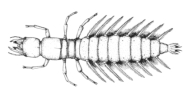
subfamily. Dobsonfly larvae are commonly called hellgrammites. They are
extremely large, up to 3” in length. They have lateral gill filaments on
abdominal segments 1-8, and a pair of terminal segment prolegs, each bearing a pair of
hooks, which they use to crawl by hitching themselves backwards. They also have
large strong mandibles, which are capable of inflecting a nasty pinch, if care is not
taken with handling them.
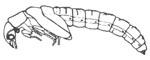
When it comes time to pupate after nearly
three years of growth, the larva crawls out of the water and seeks refuge under logs or
stones. As a result, the pupa is not available to fish.
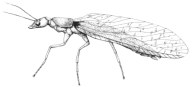
The adults are largely nocturnal and very weak flyers. |